
- Dates
- Wednesday 2 and Thursday 3 December 2026
- Venue
- Chalmers University of Technology, Gothenburg, Sweden. The exact location will be announced here.
- Format
- In person, interactive workshop
- For
- Researchers, industry experts and engineering professionals
- Language
- English
- Registration
- Register on the Chalmers event site. Registration deadline Monday 23 November 2026.
- Contact
- Ola Isaksson · ola.isaksson@chalmers.se
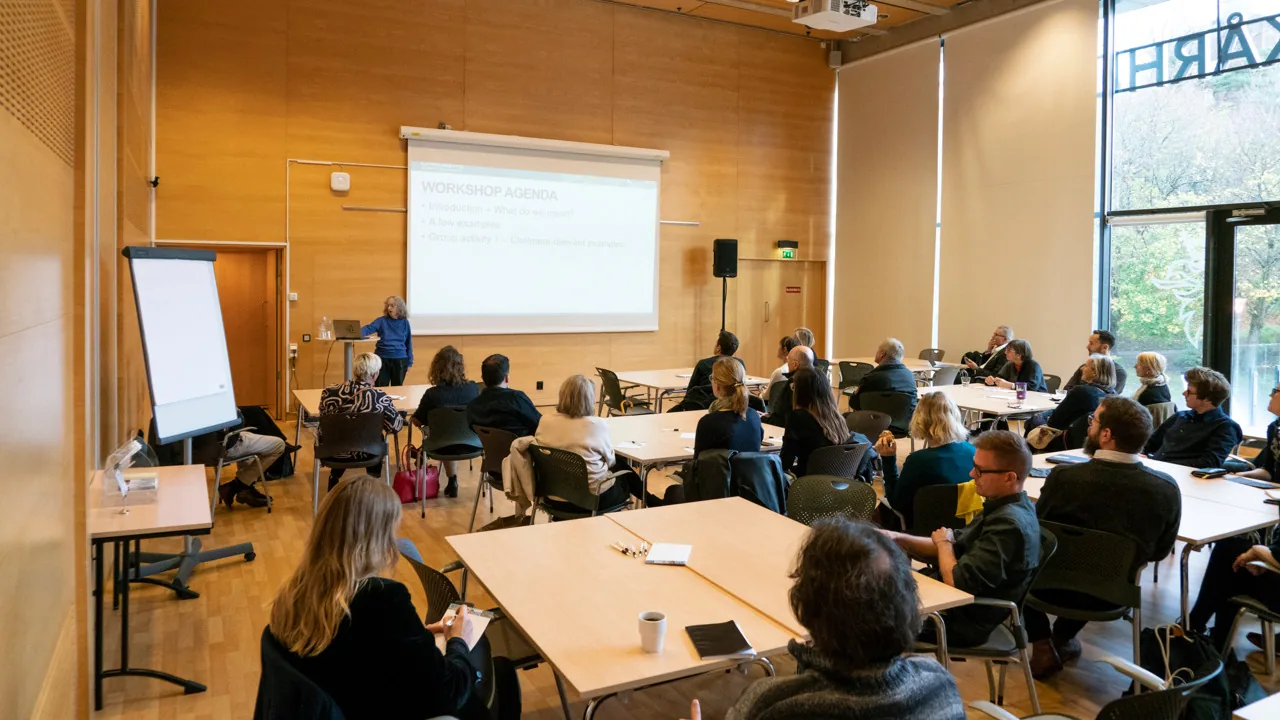
Artificial intelligence is rapidly reshaping how engineering products and systems are conceived, developed, evaluated and realised. Beyond automating existing tasks, AI opens up opportunities to fundamentally transform engineering design processes, decision-making, collaboration and professional practice. How does the manufacturing industry benefit from the rapidly advancing AI infrastructure, and what are the implications for best practices in engineering?
What will this transformation mean for engineering design research, for industry and for the next generation of engineers? Chalmers and the DRIVE PR project, together with the Special Interest Groups of the international Design Society, invite researchers, industry experts and engineering professionals to an interactive two-day workshop to share experience and explore these questions together.
Building on insights from two previous international workshops, the event brings academic and industrial perspectives together to critically examine emerging developments, identify fundamental research challenges and explore opportunities for future collaboration.
Themes for discussion
- Transforming engineering design processes. How can AI enable new approaches to design exploration, modelling, simulation, optimisation and decision-making?
- Human–AI collaboration. How will engineering roles, competencies, creativity and professional judgement evolve?
- From AI capabilities to engineering practice. What opportunities, barriers and risks emerge when AI is integrated into industrial engineering environments?
- Trustworthy AI for engineering. How can reliability, traceability, verification and engineering knowledge be maintained?
- Future research and collaboration. Which fundamental research questions and collaborative initiatives should the international community prioritise?
Programme
Wednesday 2 December: perspectives and emerging opportunities
| Time | Activity |
|---|---|
| 10:00–10:30 | Welcome, introductions and workshop objectives |
| 10:30–12:00 | Invited perspectives from academia and industry, followed by discussion |
| 12:00–17:00 | Interactive workshop: the implications of AI for engineering design, including lunch |
| 19:00–22:00 | Informal networking dinner |
Thursday 3 December: research directions and collaboration
| Time | Activity |
|---|---|
| 09:00–10:00 | Reflections and synthesis from day one |
| 10:00–12:00 | Workshop: future research challenges and collaborative opportunities |
| 12:00–13:00 | Lunch |
| 13:00–14:00 | Conclusions, priorities and next steps |
| 14:00 | Close of the open workshop |
| 14:00–16:00 | Optional focused discussions for smaller research teams. A core team stays on to work through the results. |
An additional international online workshop may be held in parallel with the first day. Details will follow separately.
Contribute
We welcome active contributions. Bring research insights, industrial experience, emerging ideas or challenging questions about the future of AI in engineering design.
When you register, tell us whether you would like to give a short perspective, introduce an industrial or research challenge, or propose a topic for collaborative exploration. The workshop is built around open dialogue and active participation rather than formal paper presentations.
Expected outcomes
Our ambition is a shared understanding of what AI means for engineering design, and promising pathways for future research and innovation. Expected outcomes include prioritised research questions, potential international collaborations, industry–academia initiatives and opportunities for joint research proposals and publications.
Welcome to Gothenburg
We look forward to two days of inspiring discussion and collaborative exploration of the future of engineering design. Join the conversation, contribute your perspective and help shape the future of AI-enabled engineering design.
Ola Isaksson, Chalmers University of Technology, host
Kilian Gericke, Claudia Eckert and Sabine Muschik, leaders of the Design Society Special Interest Groups